
Key Documents for Student Visa
REQUIREMENTS FOR STUDY IN GERMANY
Valid Passport
A valid passport with at least 6–12 months validity beyond the intended study period.
University Admission Letter
Official admission or conditional acceptance letter from a recognized German university or higher education institution.
Academic Certificates
Certified copies of previous diplomas, degrees, and academic transcripts, translated into German or English if required.
Proof of Financial Resources
Evidence of sufficient funds to cover living expenses, usually through a blocked account (Sperrkonto) or approved financial guarantee.
Health Insurance
Valid German-recognized health insurance covering the entire duration of study, mandatory for visa and enrollment.
Proof of Accommodation
Confirmation of housing in Germany, such as a rental contract, student dorm reservation, or temporary accommodation proof.
Language Proficiency Certificate
Proof of language skills depending on the program: German-taught programs: German language certificate English-taught programs: IELTS / TOEFL or equivalent
Motivation Letter
A written explanation outlining your academic goals, study plan, and reasons for choosing Germany and the selected program.
Curriculum Vitae (CV)
An updated academic CV, preferably in Europass format, detailing education and relevant experience.
Passport Photos
Recent biometric passport-size photographs meeting German visa specifications.
Visa Application Forms
Completed German national student visa application forms and payment of applicable embassy fees.
Explore Top German Universities for Residency
Universities
Discover top German universities for international students.
Disciplines
Explore popular fields like Engineering, Medicine, and Business.
Visa & Residency
Student visa leads to residence permit (18 months job search after graduation).
Costs
Mostly tuition-free public unis + semester fees (~€300).

Study in Germany
Study in Germany: Everything You Need to Know from Admission to Post-Graduation
Germany is one of the world’s top destinations for international students—offering globally respected degrees, strong career opportunities, and a clear pathway to long-term residence in Europe. Whether you’re applying for a Bachelor’s, Master’s, or a research program, Germany provides a transparent academic system, high-quality universities, and a student lifestyle that balances affordability with modern infrastructure.
This guide covers everything you need to know: eligibility, admission requirements, language options, visas, blocked account, costs, timelines, work rights, and what happens after graduation.
Programs
Types of Study Programs in Germany
Bachelor’s (Undergraduate)
- Usually 3–3.5 years
- Most programs are German-taught
- English options exist but are less common than Master’s
Master’s
Balanced services with faster processing
- Usually 1–2 years
- Many English-taught options
- Strong choice for international applicants
PhD / Research
- Often research-based with supervisor agreement
- Can be funded (scholarships, projects, research positions)
Preparatory Pathways
- Studienkolleg for applicants who need academic equivalency
- Language courses (can be used as a pathway, depending on visa strategy)
German vs English
German vs English Programs (Which One to Choose?)
English-taught programs
Best for:
- International students who want to start quickly
- Master’s applicants
- Applicants who plan to learn German during study
German-taught programs
Best for:
- Lower tuition availability is common across both
- More choices at Bachelor level
- Stronger integration and job opportunities during/after study
If your goal is long-term residence/work, learning German to at least B1–B2 is a major advantage.
Study in Germany
Why Study in Germany?
Germany stands out because it combines academic excellence with real-world outcomes. Many programs are tightly connected to industry, and graduates benefit from a strong labor market—especially in engineering, IT, healthcare, business, and research.
Key advantages
Internationally recognized universities and degrees
Strong employment market for graduates
Wide range of English-taught programs (especially Master’s)
Safe, modern, and student-friendly cities
Clear rules for residence permits and post-study stay
Good quality of life and excellent public transport

Who Can Study in Germany?
Admission in Germany depends on:
Your previous education level
Your field of study
Language proficiency
Meeting university requirements
Common eligibility routes
Bachelor’s applicants: High school diploma equivalent to German Abitur (or via Studienkolleg if needed)
Master’s applicants: Recognized Bachelor’s degree in a related field
PhD applicants: Master’s degree + supervisor acceptance/research fit
If your prior education is not fully recognized, you may need:
Studienkolleg (foundation year) + Feststellungsprüfung exam
Admission Requirements (What You Need)
Different universities and programs vary, but the most common requirements include:
Core documents
Valid passport
Academic transcripts and diploma(s)
CV (Europass style often accepted)
Motivation Letter / Statement of Purpose
Letters of Recommendation (especially for Master’s/PhD)
Proof of language proficiency
Portfolio (for arts/architecture/design)
Work experience documents (for MBA and some programs)
Language requirements
German-taught:
Typically B2–C1 (TestDaF / DSH / Goethe etc.)
English-taught:
IELTS / TOEFL (program-specific minimums)
GPA & academic fit
Some programs are strict; others are flexible but require strong motivation, related coursework, or projects.

Where to Apply: Uni-Assist vs Direct Application
German universities use one of these:
Uni-Assist (central evaluation platform for many universities)
Direct application (university portal)
Some programs have separate faculty application systems
Each program will list:
Application channel
Required documents
Deadline
Whether notarized translations are needed
Application Timeline (Recommended Plan)
Typical intake periods
Winter intake: September/October (most common)
Summer intake: March/April (limited programs)
Safe timeline
8–12 months before start: Choose programs, prepare language tests
6–8 months before: Prepare documents, translations, APS if required
4–6 months before: Submit applications
2–4 months before: Receive admission, start visa + blocked account
1–2 months before: Finalize accommodation + travel + insurance
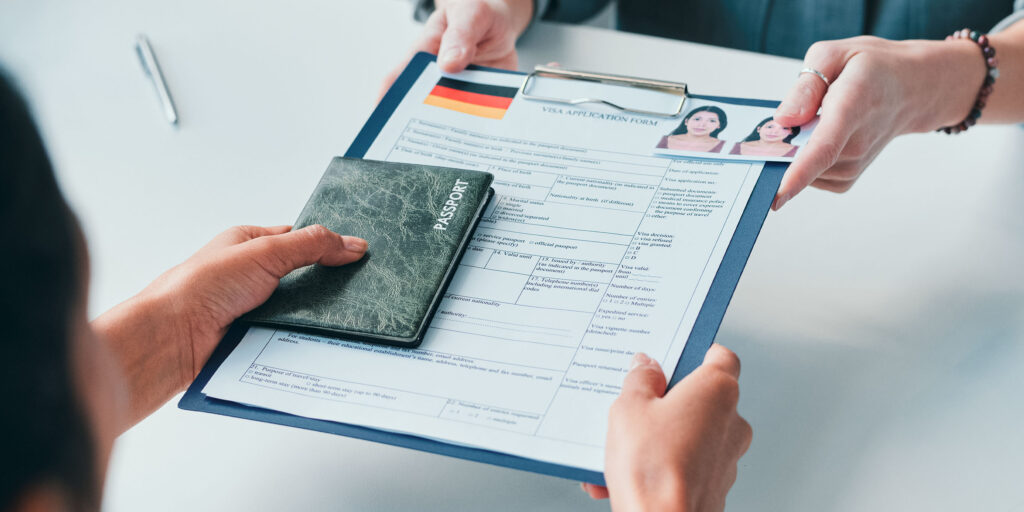
Student Visa for Germany (Step-by-Step)
If you are non-EU/EEA, you typically need a German National Visa (Type D) for study.
Process overview
Get admission / acceptance (or conditional admission)
Prepare financial proof (often blocked account)
Book embassy appointment
Submit visa documents
Enter Germany and convert to a residence permit
Student visa vs student applicant visa
Student visa: you already have admission
Applicant visa: you need time in Germany to apply/interview/exams (depends on your case)
Financial Requirements (Blocked Account + Proof of Funds)
Germany usually requires proof that you can cover living expenses.
Common proof options
Blocked account (Sperrkonto)
Scholarship proof
Sponsor/guarantor in Germany (formal obligation letter)
Proof of personal funds (less common depending on embassy)
Blocked account is the most common route for international students.
Cost of Studying and Living in Germany
Tuition
Many public universities have low or no tuition, but students still pay:
Semester contribution (covers admin + student services; varies by university)
Private universities may have high tuition, but sometimes offer flexible admission.
Monthly living costs (estimated)
Your main expenses:
Accommodation
Health insurance
Food & transport
Study materials
Residence/permit fees
Germany is generally more affordable than many Western European study destinations, especially outside major cities.
Health Insurance (Mandatory)
Health insurance is required for:
Visa
Enrollment
Residence permit
Types:
Public insurance (common for students under certain conditions)
Private insurance (sometimes used for older students or special cases)
Your university/visa requirements will influence which type fits your profile.

Working While Studying (Rules & Reality)
Germany allows student work with rules:
Part-time jobs
Student assistant jobs
Internships (some are mandatory and treated differently)
Common student job areas
Retail and hospitality
Delivery and logistics
University assistant/research support
Tech internships (for CS/engineering students)
Tip: German language improves job options dramatically.
German Universities
Best Universities in Germany for International Students
| University | City | QS Rank | Semester Fee (€) | Language | Popular Programs |
|---|---|---|---|---|---|
| Ludwig Maximilian University of Munich (LMU) | Munich | =52 | €150–€350 | German / English | Medicine, Law, Economics |
| Technical University of Munich (TUM) | Munich | =63 | €150–€350 | English / German | Engineering, IT, AI |
| Heidelberg University | Heidelberg | =84 | €150–€350 | German / English | Medicine, Life Sciences |
| RWTH Aachen University | Aachen | 120 | €300–€350 | German / English | Engineering, Technology |
| Humboldt University of Berlin | Berlin | =130 | €150–€300 | German / English | Social Sciences, Humanities |
| Free University of Berlin | Berlin | =139 | €300–€350 | German / English | Political Science, Biology |
| University of Freiburg | Freiburg | =109 | €150–€350 | German / English | Environmental Science |
| Karlsruhe Institute of Technology (KIT) | Karlsruhe | =145 | €150–€350 | English / German | Engineering, Computer Science |
After Graduation: Stay, Work, and Path to Residency
One of Germany’s biggest advantages is the post-study pathway.
Typical next steps
Graduate
Apply for a post-study residence option to look for a job
Find qualified employment
Convert to a work residence permit / skilled worker route
Build a path toward long-term residence
Germany is structured and process-driven—successful planning makes outcomes easier.

Best Fields to Study for Career Outcomes
Germany is especially strong in:
Computer Science & Data
Engineering (mechanical, electrical, automotive)
Healthcare and Life Sciences
Business, Finance, Supply Chain
Renewable energy and sustainability
Research-based fields
Accommodation in Germany (What Students Should Know)
Housing can be competitive in major cities.
Main options
Student dorms
Shared apartments (WG)
Studio rentals
Temporary housing for first month
Tip: Start early—housing is often the #1 challenge.
Common Mistakes to Avoid
Applying too late for deadlines
Underestimating document legalization/translations
Ignoring APS requirements (if applicable to your nationality)
Weak motivation letter not matching program
Not planning finances realistically
Waiting for admission before preparing visa essentials
Germany Stories
Germany Highlights

August 27, 2025
Top 5 Emerging Areas for Property Investment in Dubai in 2025
Dubai continues to solidify its position as a global hub for real estate investment, attracting high-net-worth individuals, expatriates, and institutional investors alike. With its tax-free environment, world-class infrastructure, and ambitious development projects, the emirate's property market remains resilient even amid global economic fluctuations. As we look towards 2024, several emerging neighborhoods stand out for their growth potential, offering a mix of luxury living, commercial opportunities, and strong rental yields.

August 27, 2025
How to Secure a UAE Work Visa: Employer Sponsorship and Required Documents
The United Arab Emirates (UAE) is a global hub for professionals seeking career opportunities in industries like finance, technology, healthcare, and construction. Securing a UAE work visa is a critical step for expatriates looking to work legally in the country. The process primarily revolves around employer sponsorship, as the UAE requires employers to initiate and facilitate work visa applications. This article outlines the steps to obtain a UAE work visa, the role of employer sponsorship, and the essential documents required in 2025.
August 27, 2025
Cost of Living in Dubai vs. Other Global Hubs: Salary, Housing, and Lifestyle
Dubai has long been a magnet for expatriates, entrepreneurs, and professionals drawn to its tax-free income, luxurious lifestyle, and strategic location. As of 2025, understanding the cost of living in Dubai compared to other global hubs like New York, London, Singapore, and Hong Kong is essential for anyone considering a move. This article breaks down key factors—salary, housing, and lifestyle—using data from reliable sources such as Numbeo and Mercer’s Cost of Living Survey. While Dubai offers affordability in some areas, it competes closely with these cities in others, making it a compelling yet nuanced choice.
August 27, 2025
Dubai Golden Visa Through Real Estate Investment
The UAE's Golden Visa program has revolutionized long-term residency options for investors, entrepreneurs, and talented individuals, offering a pathway to stability without the need for constant visa renewals. Launched in 2019 and expanded in 2022, the program grants 5- or 10-year renewable residency visas. For real estate enthusiasts, investing in Dubai's booming property market provides an accessible route to this coveted visa.
FAQ
Frequently Asked Questions
Yes—especially at Master’s level. Bachelor’s programs are more often German-taught.
Not always for English-taught programs, but for living and working, German is a major advantage.
Compared to many countries, yes—especially with public universities and careful budgeting.
It’s a financial proof mechanism showing you can support yourself during your stay.
Yes—students can work under regulated rules and many find part-time jobs.
Germany offers post-study routes to seek work and transition into long-term residence pathways.
Join 3,000+ subscribers
Stay in the loop with everything you need to know.
Expert Guidance
Trusted immigration lawyers simplify your residency process.
Fast Processing
Swift and efficient handling of all residency applications.
Proven Success
Over 500 successful cases in investment and work visas.
Free Consultation
Get quick, expert advice tailored to your residency goals.